AMAZON’S EXPERTSPRIVATE PROPOSALHENSCHEL HAT COMPANY
Prepared for Henschel Hats
Make generations of hatmaking easier to buy.
Henschel has the product depth. The opportunity is to make that expertise work across the Amazon catalogue, Store, listings and advertising—without sacrificing established sales history for a cleaner-looking account.
Henschel’s catalogue is deeper than its Amazon navigation.
The Amazon Store we inspected currently concentrates navigation around Home, Breezer and Winter, while the DTC catalogue spans substantially more collection, material and shape-based shopping paths.
Henschel.com lets shoppers browse Breezer, Western, Big Heads, materials and more than 20 shapes. On Amazon, we also saw 11 image-led homepage tiles and a largely image-led Breezer page. The photography carries the experience, but shoppers get fewer product-led paths for comparing available hats.
What we would solve first
Four connected workstreams.
Catalogue, content and advertising decisions happen in sequence. Fixing them independently creates new inconsistencies.
01
Catalogue
Build the product map first
Map model, material, colour, size, SKU and ASIN before touching variations. Separate true duplicates from legitimate standalone products, protect sales history, and use the same map to identify remaining SKUs for upload.
02
Conversion
Make expertise visible
Turn product knowledge into buying information: fit, sizing, material, brim dimensions, function and use case. Keep model names, then test which verified attributes deserve prominence in titles, bullets, images and A+.
03
Merchandising
Organize around how people shop
Add a small number of useful Store destinations—breathable outdoor, leather and larger sizes—supported by the Amazon assortment. Pair lifestyle imagery with product grids instead of recreating every website category.
04
Operations
Stabilize the offer before scaling ads
Monitor stock, price, offer ownership and Featured Offer share on priority ASINs. Distinguish legitimate resale from documented violations; pursue enforcement only when the evidence supports it.
One content system, three distinct arguments
Reusable does not mean repeated.
BREATHABLE OUTDOOR
Breezer
Ventilation, outdoor comfort, sun coverage and fit—shown in use, not buried in generic modules.
MATERIAL & CRAFT
Leather
Leather type, brim construction, shapeability, finish and care should do the persuasion.
CONFIDENCE IN FIT
Larger sizes
Clear measuring, size selection and silhouette guidance reduce uncertainty before purchase.
CURRENT TITLE
“Henschel Hats Ilkeston Leather Walker Hat”
UNDER-COMMUNICATED BUYING REASONS
Cowhide leather. Three-inch shapeable brim. Outdoor and Western use. Keep the model name, then use shopper-language research to decide which verified facts belong in the title versus bullets and imagery.
PPC follows retail readiness
Do not pay to expose a catalogue problem.
ADVERTISED PRODUCTS
Prioritize reliable offers, healthy stock, sufficient margin and clear sizing/content.
SEARCH RELEVANCE
Check whether breathable, leather, larger-size and winter intent reaches the correct products.
Promote actual converters into controlled manual targeting and exclude demonstrated irrelevance.
How we’d start
Start small. Build the system. Expand.
A priority-ASIN pilot that creates evidence, then becomes an ongoing operating rhythm.
PHASE 1
Baseline
Select commercially important ASINs. Map identity, offers, stock, content, returns and PPC performance.
PHASE 2
Correct
Resolve the highest-impact catalogue and offer issues; document eligible variation relationships.
PHASE 3
Improve
Upgrade one verified conversion gap and route relevant advertising with a capped test budget.
PHASE 4
Decide & Expand
Review consistent metrics, maintain the action register, and expand across the families that earn the next rollout.
Relevant operating evidence
Catalogue and ads, managed together.
Selected anonymized results from other Amazon accounts. Evidence of operating experience—not a forecast for Henschel.
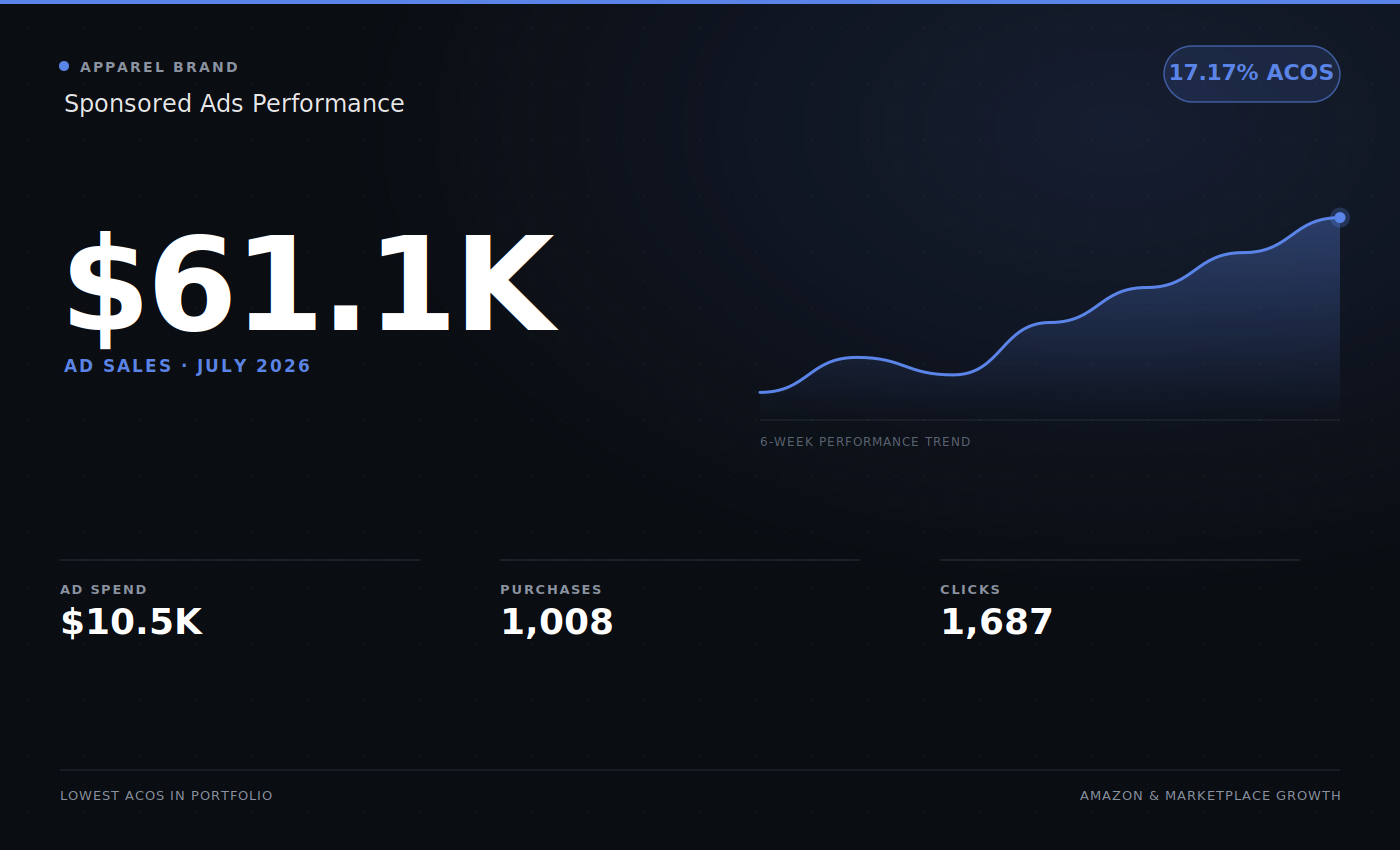
Apparel advertising$61.1K ad sales
1,687 purchases at 17.17% ACoS.
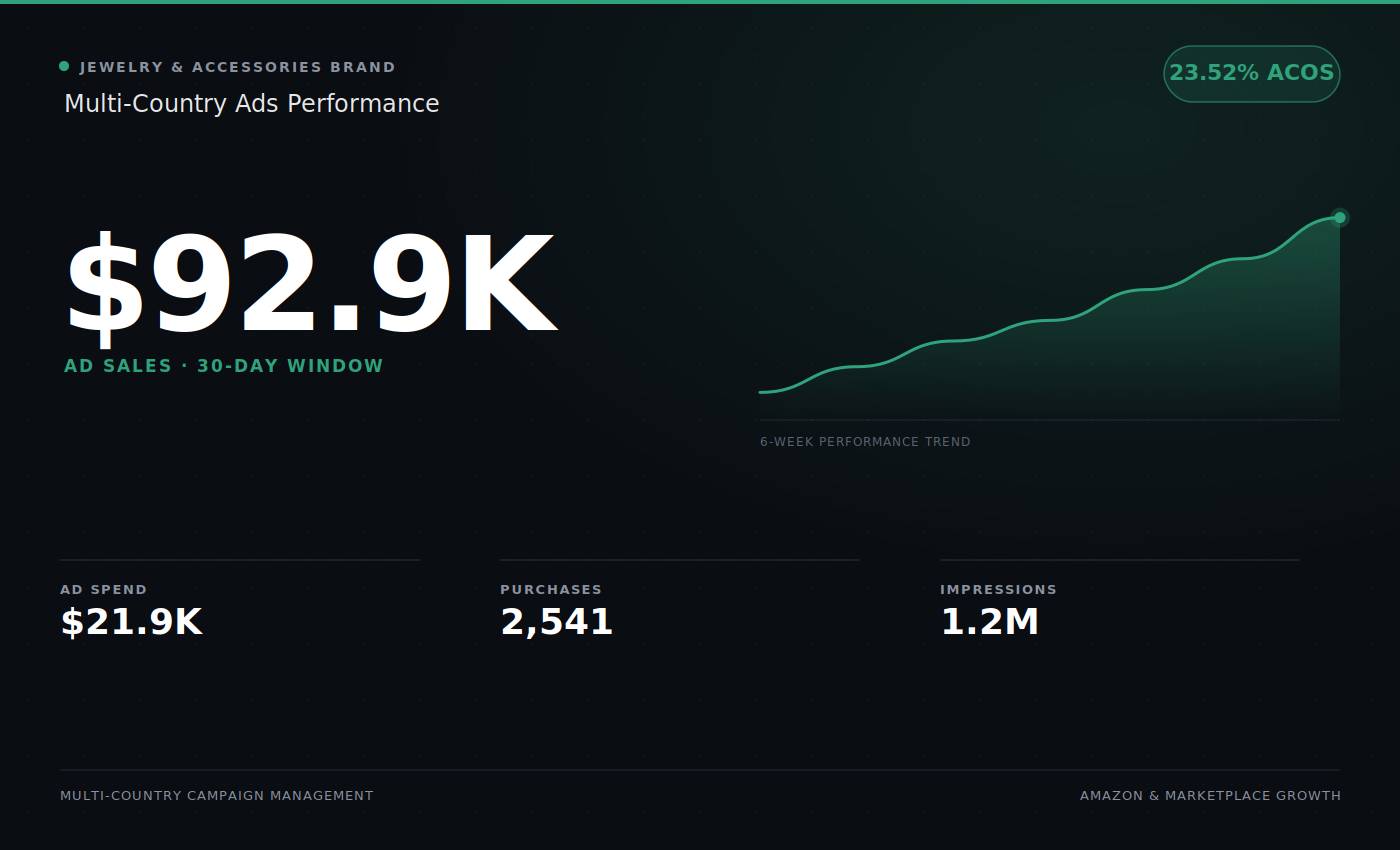
Variation-led catalogue$59.5K ad sales
Multi-marketplace operations and advertising.
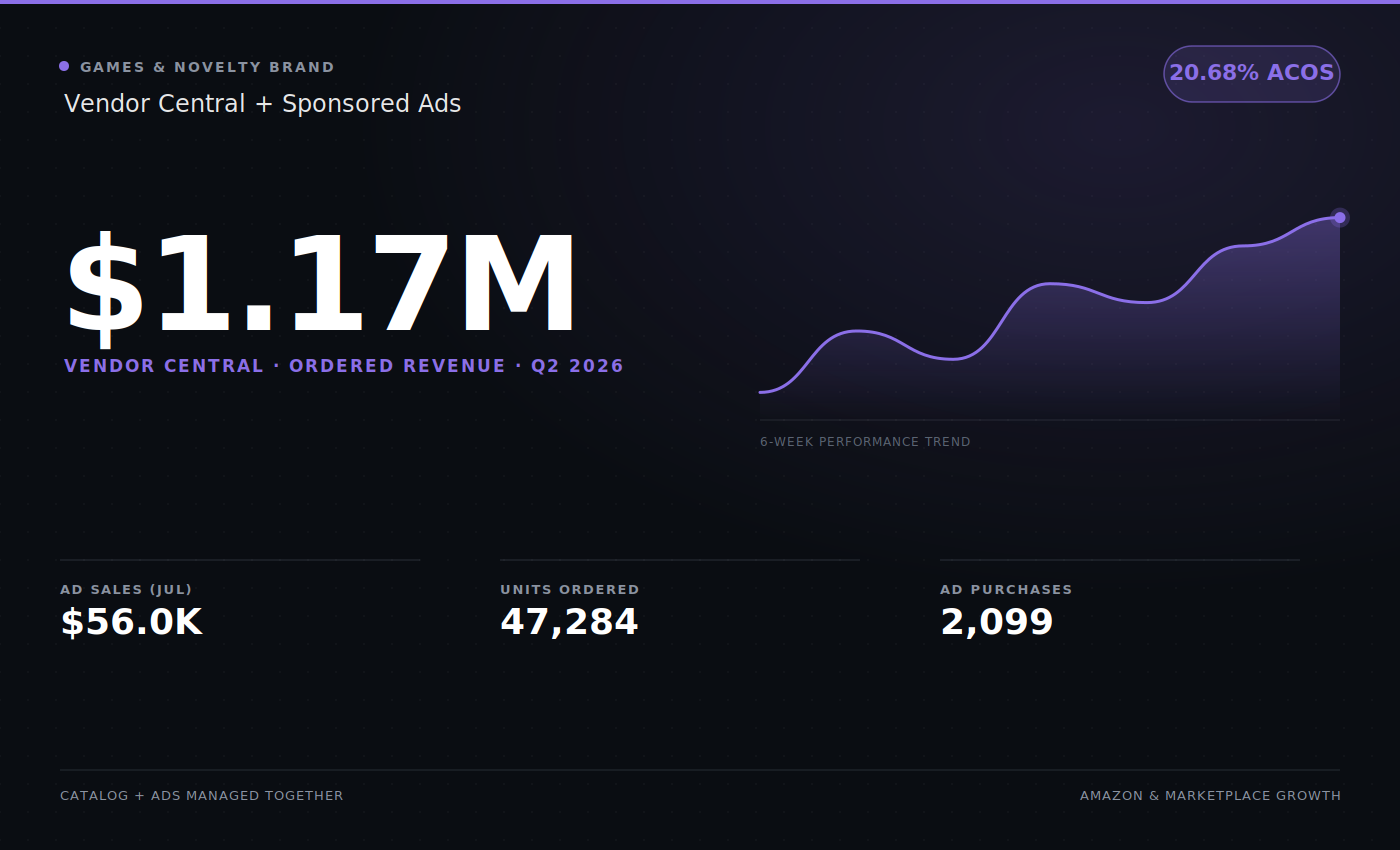
Catalogue + advertising$1.17M ordered revenue
Operations and ads managed as one system.
What we need
Five inputs. One account view.
The first deliverable is a prioritized register showing what to fix, preserve, test and scale—with every recommendation tied to observed account evidence.
Catalogue export with SKU, ASIN, model, size, colour and material
60 days of search-term, targeting, advertised-product and placement reports
Current budgets, bids, bidding settings and placement adjustments
Featured Offer, reseller, stock and suppressed-listing status
Child-level sales, returns, fees, product costs and contribution
The outcome
A Henschel catalogue people can navigate—and advertising that knows where to send them.
We will connect product identity, retail readiness, content and paid demand in one repeatable operating model.
Discuss the engagementPrepared from the supplied Henschel Hats consolidated Amazon micro-audit. Account conditions and performance claims remain subject to validation.