Relevance
Route intent to the right shade
Separate light-filtering, blackout, and top-down/bottom-up demand at the advertised-child level. Keep productive campaigns intact; fix only the destinations, bids, and budgets the data shows are misaligned.
Prepared for Arlo Blinds
Arlo already has demand. The opportunity is to make paid traffic more precise: match each search to the correct variation, protect the queries already converting, and price every click against profit after returns.
The strategic read
Light-filtering, blackout, and top-down/bottom-up shoppers are not interchangeable. When they land on the wrong child, the account can pay for a click the product was never built to convert.
“Preserve what works. Isolate what is unclear. Scale only what pays back after returns.”
What we would change first
This is a controlled optimization—not a campaign rebuild for the sake of a cleaner spreadsheet.
Separate light-filtering, blackout, and top-down/bottom-up demand at the advertised-child level. Keep productive campaigns intact; fix only the destinations, bids, and budgets the data shows are misaligned.
Find converting queries inside auto, broad, and phrase campaigns, then give the winners controlled exact-match coverage. Check for existing exact targets first so the account does not compete with itself.
Review no-drill, motorized, custom-cut, and dimension-specific traffic. Negate only where the advertised child cannot satisfy the search—at the campaign or ad-group level that preserves useful discovery elsewhere.
Validate B07QG9NKMD contribution after returns before scaling it. A warning on one child is not a reason to suppress the whole parent, but it is a reason to stop judging ads on attributed revenue alone.
The first controlled test
B004TMNOUS
Use account-backed light-filtering and matching-dimension queries. Send them to the in-stock child that satisfies the request.
Set the test limit from allowable acquisition cost. Hold price, coupon, creative, and other major levers stable.
Read CTR, CPC, conversion, CPA, and ACoS alongside TACoS, total sales, stock, and contribution after returns.
Candidate queries from the audit are research inputs, not claimed high-volume or profitable keywords. The account report decides what enters the test.
30-day engagement
A practical first month designed to produce decisions, not dashboards.
Normalize 60 days of reports. Map search terms, targets, spend, orders, returns, stock, and contribution to every advertised child.
Mark what to scale, reduce, pause, negate, or test. Attach proposed bid and budget changes to observed performance.
Protect proven demand, repair intent routing, launch the bounded child-ASIN test, and review weak placements before raising base bids.
Allow attribution to mature, compare consistent periods, and leave Arlo with a scale / hold / stop decision for each action.
How bids become business decisions
Contribution before advertising, including expected return cost, minus desired profit.
Contribution before advertising divided by revenue, with consistent treatment of returns.
Allowable CPA multiplied by expected ad conversion rate—a starting estimate, never an automatic bid.
Evidence from previous work
Selected, anonymized results from Amazon accounts we have managed. Different categories and time periods; shown as evidence of operating experience, not a forecast for Arlo.
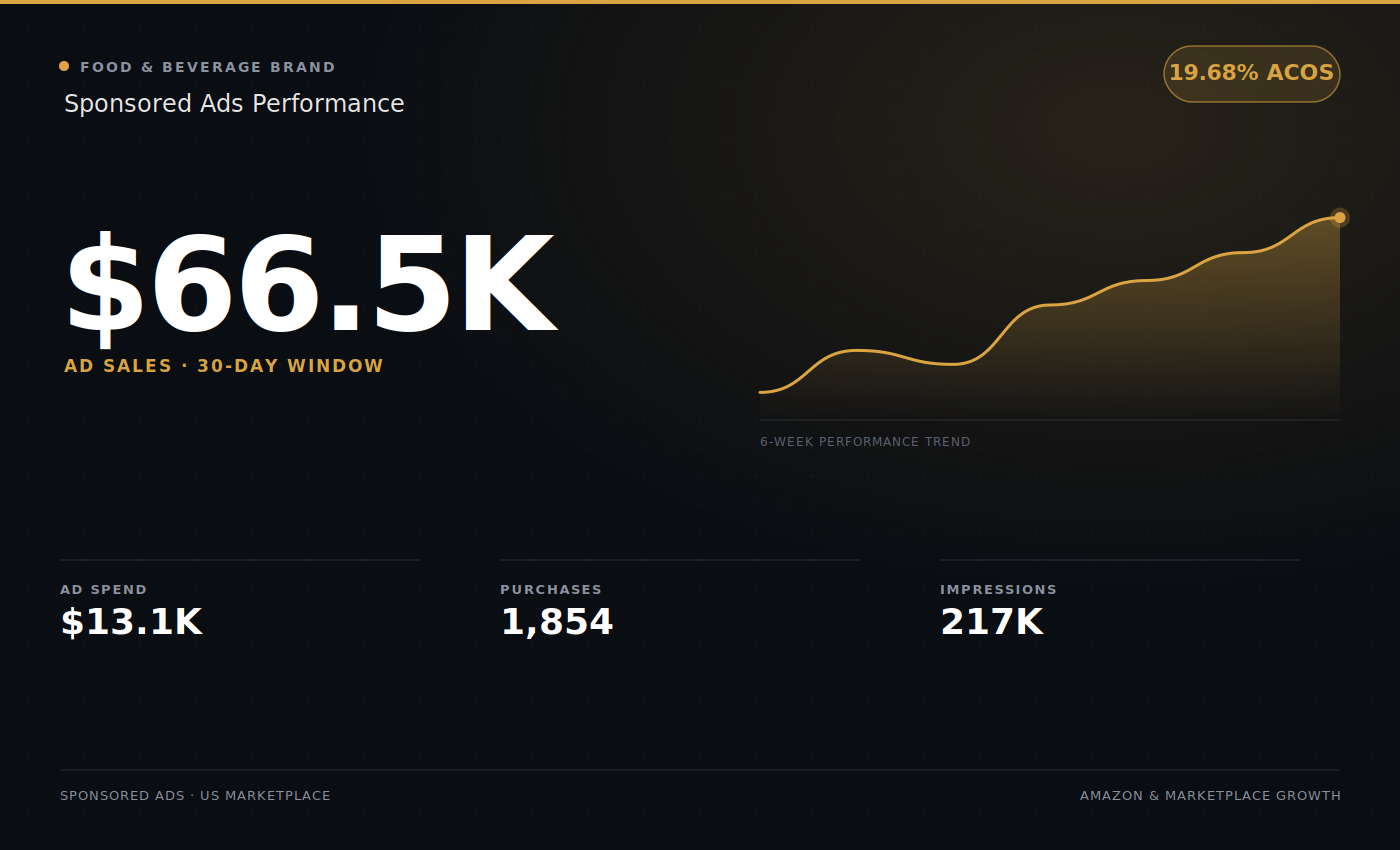
1,854 purchases at 19.68% ACoS in a 30-day window.
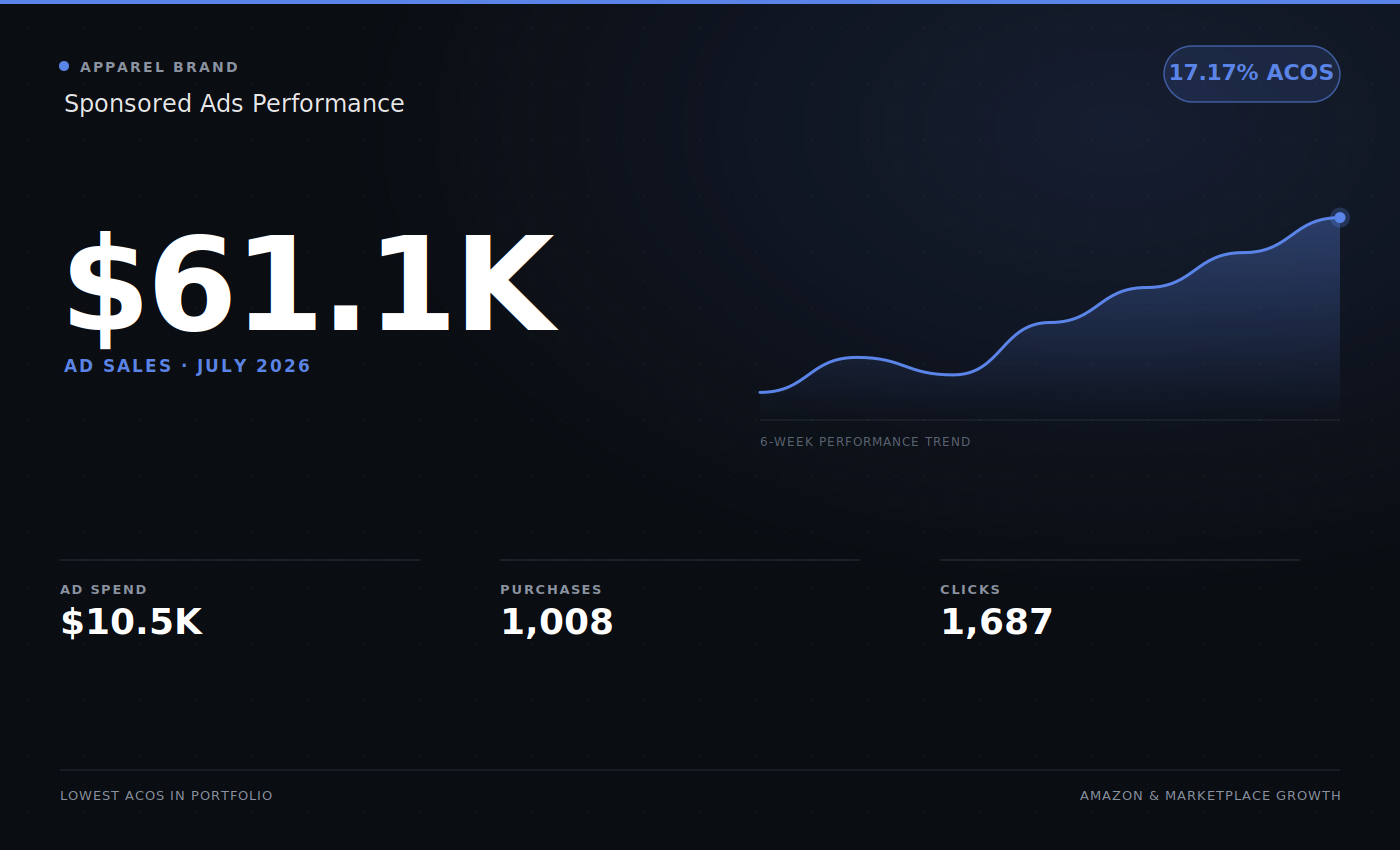
3,008 clicks and 1,687 purchases at 17.17% ACoS.
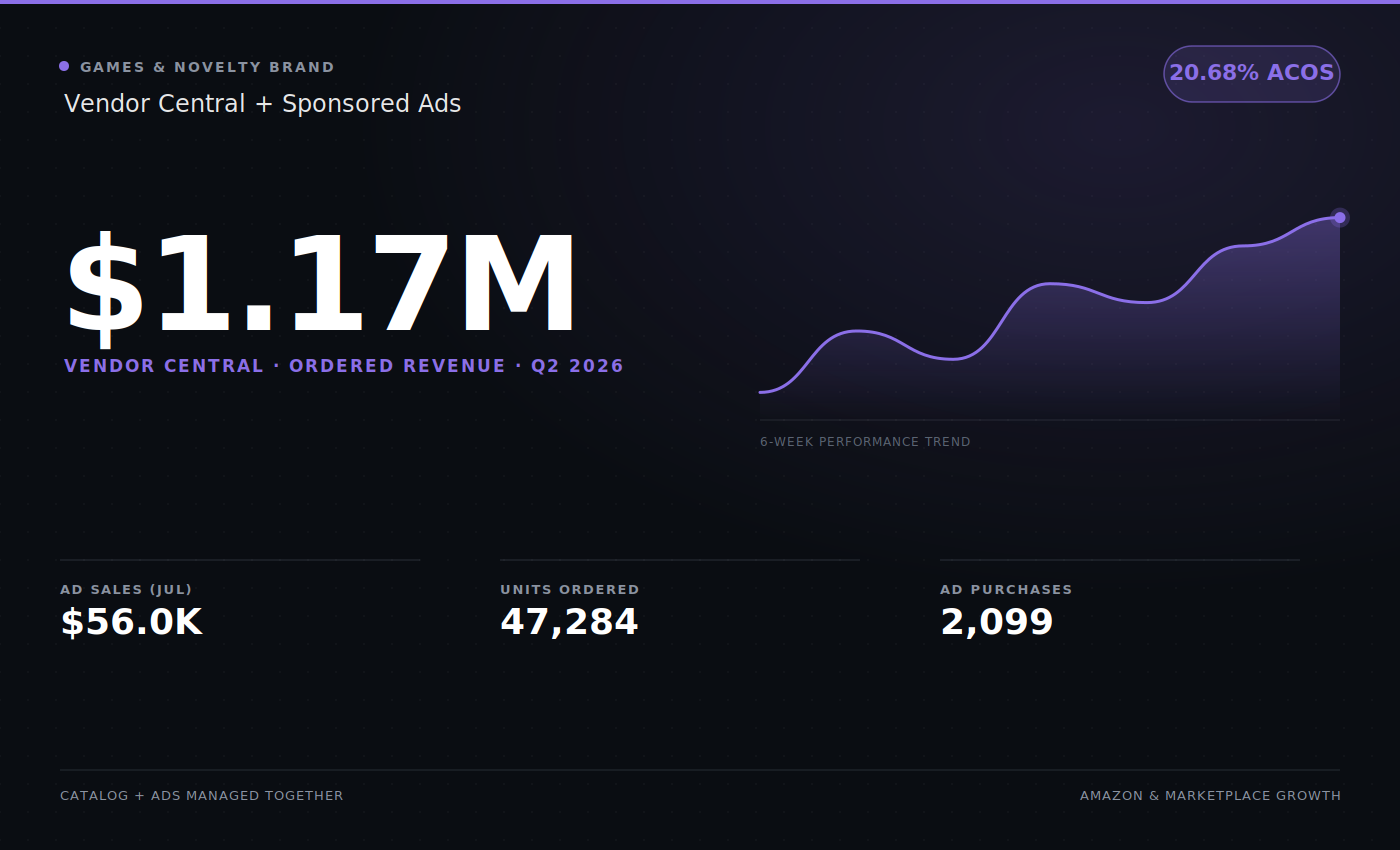
Catalog and advertising managed together, with 2,099 ad purchases.
What we need from Arlo
Compare the latest 30 days with the preceding 30 on consistent attribution windows, then pair advertising performance with the child-level business reality.
The proposal
We will turn the audit into a prioritized account action sheet, execute the first controlled changes, and leave the team with a clear operating model for what to scale next.
Discuss the engagementPrepared from the Arlo Cellular Shades PPC Micro Audit dated 11–12 Sep 2026. No ad account was inspected and no performance outcome is guaranteed.